Design and sourcing notes
Start with the sole, not the face
A buyer opens the sample box, admires the ears, flips the slipper over, and puts it back on the table without a word. That is the normal order of judgement in this category, and it is the correct one. Adult cat slippers are chosen for the face and returned for the sole.
The wearer is not a five-year-old crossing a carpeted playroom. She is an adult carrying a hot pan across a tiled kitchen, standing at a counter for twenty minutes, or stepping onto a damp balcony on a November morning. Three things change with that wearer: more mass on the heel, more lateral torque on turns, and far more continuous hours of wear.
At EU 40 and above, a foot flexes the sole further forward than any children's pattern was designed for. Scale a kids' mould up by 1.2 and the flex point lands under the arch instead of behind the ball of the foot, so the toe lifts off the ground with every step. Below roughly 8 mm of TPR or EVA with a continuous tread band around the perimeter, the slipper starts to feel thin within a month of daily indoor wear. Anything above EU 42 needs a heel strap or a low back counter, or the slipper will walk off the foot on stairs.
The specification sheet that prevents complaints
Most adult cat slipper problems trace back to four numbers that never made it into the tech pack. The table below shows the targets we work to in sampling; treat them as a starting point, then adjust against your own wear tests and the destination market's size chart.
| Specification | Sensible adult target | What actually goes wrong |
|---|---|---|
| Insole length range | 23.0 – 28.5 cm, graded in 5 mm steps | A scaled-up kids' pattern leaves a short toe box at EU 44 and a slipper that is worn backless |
| Plush pile weight | 280 – 400 g/m², short pile of 6 – 10 mm | Pile around 200 g/m² mats flat after three or four washes |
| Sole compound and thickness | TPR or EVA, 8 – 12 mm, continuous perimeter tread | Hard PVC skids on polished tile and cracks at the flex line |
| Pair weight at EU 40 | 180 – 260 g | Under 150 g usually means a hollow, thin-walled sole |
| Washing tolerance | Cold wash at 30°C, no tumble dry | Glued appliqué and trim lift once water passes 40°C |
| Face symmetry | Eye spacing within ±1.5 mm, ear height within ±2 mm | An asymmetric face reads as a defect, not as character |
Making the cat read as a cat
The face is a manufacturing problem before it is an aesthetic one. Ears sitting 3 mm too far apart turn a cat into a bear; eyes 2 mm out of alignment turn a cute design into a second-quality lot. Fix the tolerances in the tech pack rather than in a comment thread six weeks later.
Appliqué ears hold their shape better than printed ones after washing, but they add four to six minutes of sewing per pair and must be bar-tacked at the base or they curl at the tip. Whiskers survive longest as dense satin stitching rather than loose thread tails, which children pull and adults trim off with scissors. Short pile of 6 – 10 mm works best on the muzzle where the shape needs to stay crisp, while the body and tail can carry a longer, softer pile.
A cat slipper is a toy on the shelf and a shoe in the hallway. The order goes to whoever remembers the second half.
Colour is where sampling budgets disappear. Cream, grey and tabby brown hide soil between washes and photograph honestly; pure white looks superb in a lookbook and shows every footprint by day three. If white is non-negotiable for the range, specify a removable insole or plan a darker sole colour to draw the eye downward.
Adult sizing and the kids'-slipper trap
The easiest way to build an adult range is to enlarge an existing children's design, and it is also the fastest way to generate returns. Adult feet are wider across the ball, carry more volume in the instep, and spend longer in the shoe. A toe box that fits a child's foot at 1.2x scale will press on the big toe of an adult after an hour.
Two practical fixes cover most of the problem. First, grade the last rather than the pattern: add width at the ball and volume at the instep as sizes climb, not just length. Second, decide early whether the range is unisex or split. A shared EU 38 – 44 run keeps stock simple for gifting and holiday programmes, while a split women's 36 – 41 and men's 41 – 46 range fits better and needs separate colourway commitments.
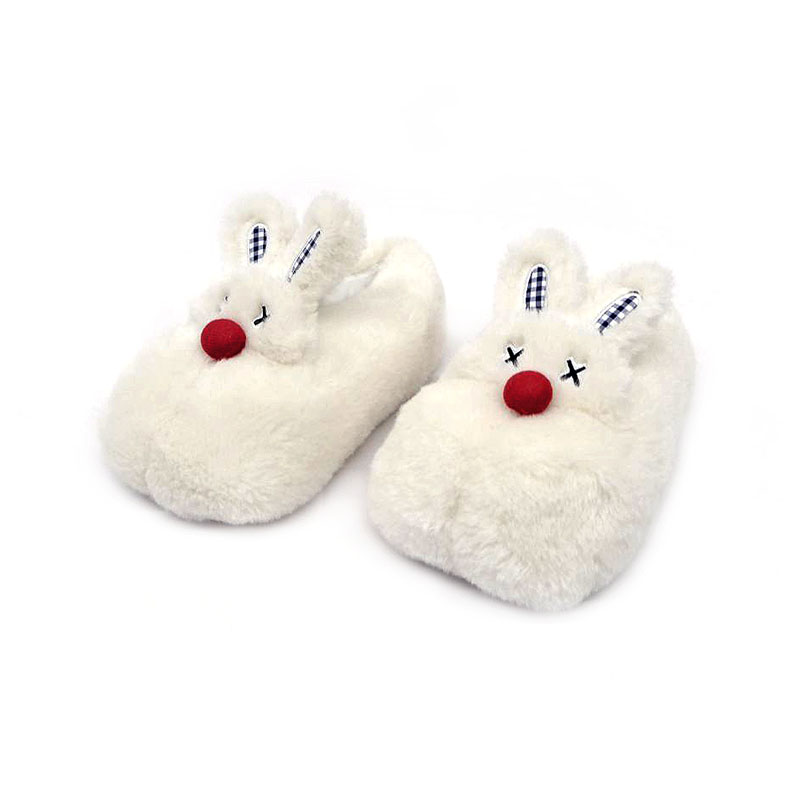
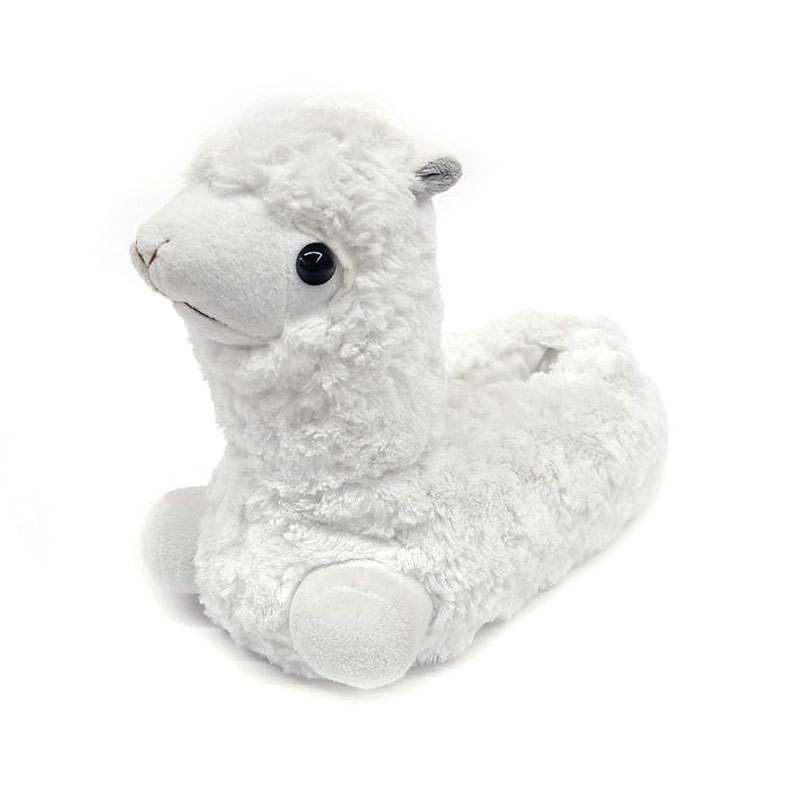
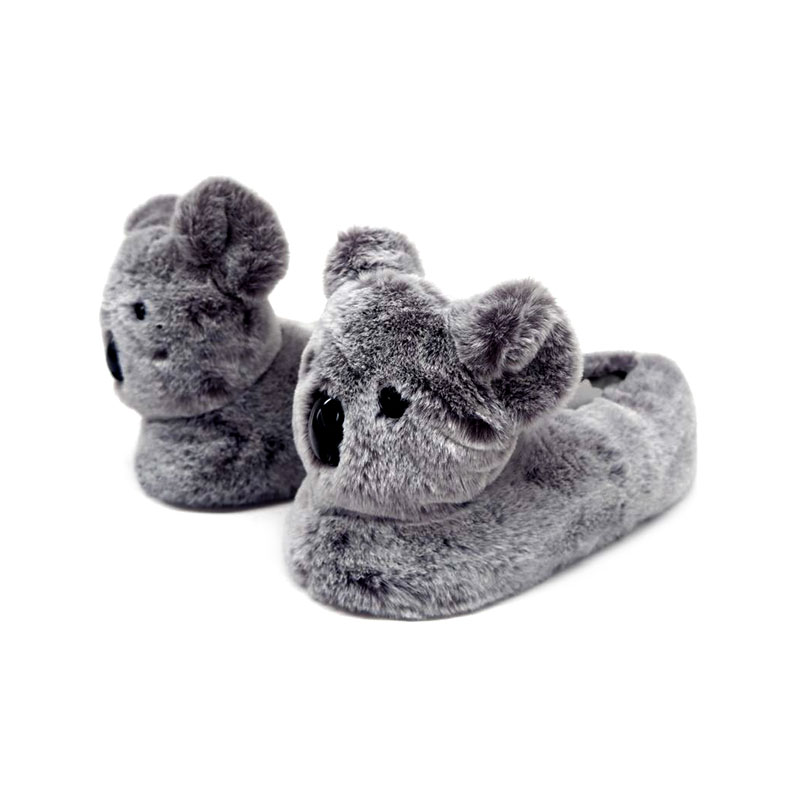
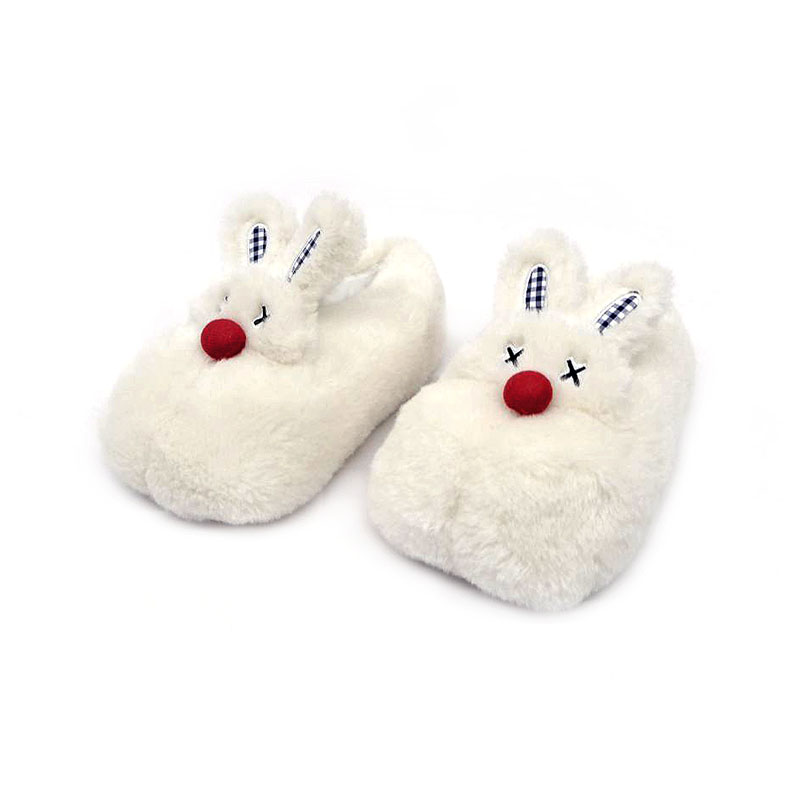 Women’s Plush Animal Slippers for OEM/ODM RangesBrowse varied women’s animal plush slippers, including rabbit, koala, turtle and frog styles, with shared materials and decoration for OEM/ODM indoor ranges.View Product →
For buyers building a full family of plush animals on one construction, it helps to see how a women's line is graded across sizes and silhouettes before committing to a cat. The same platform carries ears, tails and appliqué, so a new animal is a face change rather than a new mould.
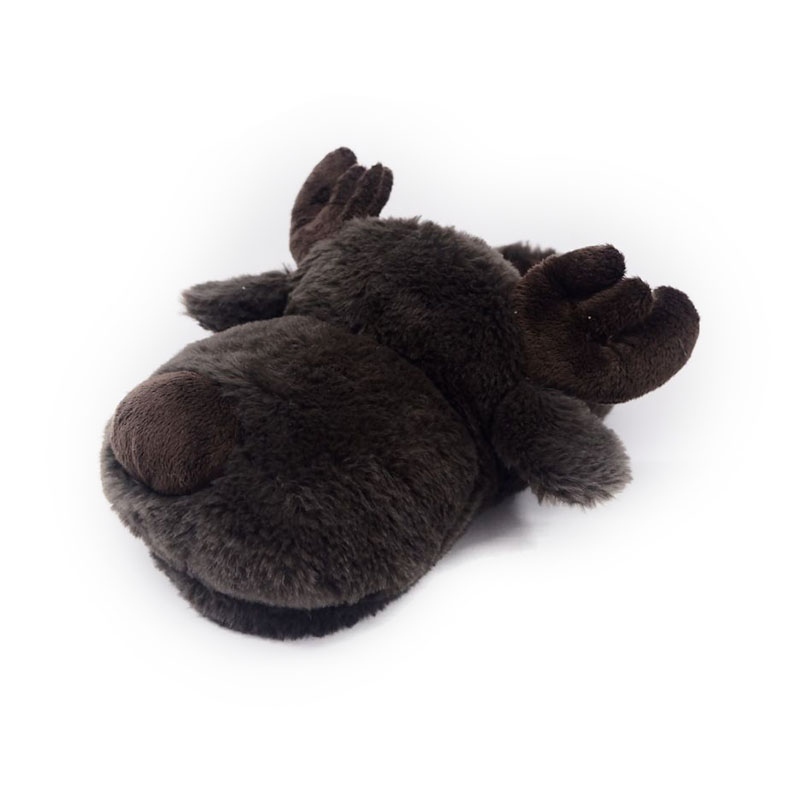
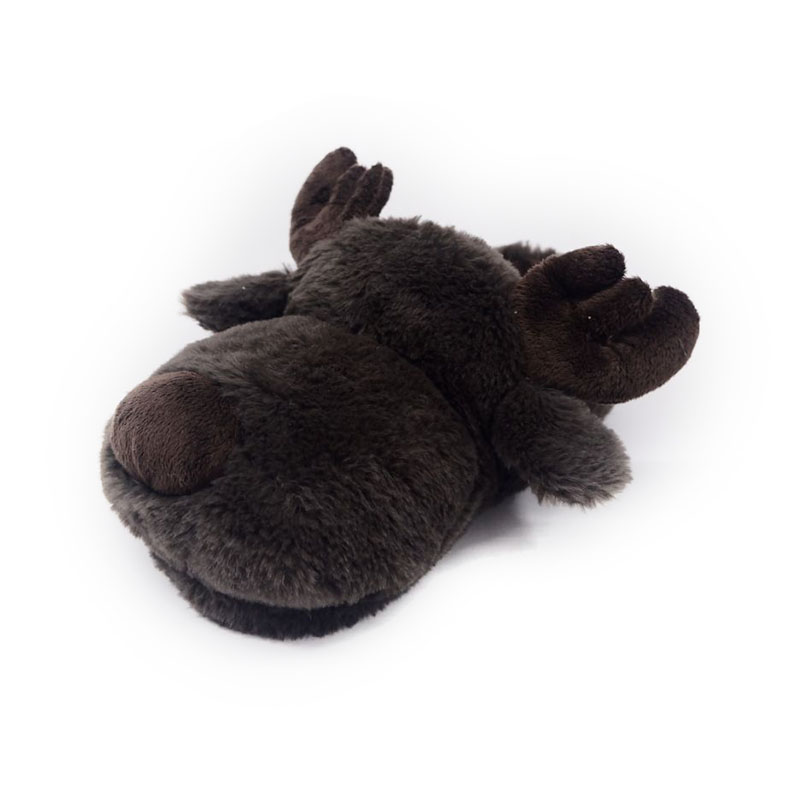 Men’s Plush Animal Slippers for OEM/ODM SupplyReview men’s plush animal slippers, including an elk design, with durable upper options, cushioned soles and anti-slip treatment for home or casual wear.View Product →
Men's sizes are where most cat programmes quietly stop. Plush animal designs for larger feet need a wider last, a firmer sole and a more restrained face, otherwise the sample photographs well and sells badly.
Traction, noise and the floors people actually have
Indoor flooring is the least discussed and most decisive variable in adult slipper design. Polished porcelain, engineered oak, vinyl plank and stone all behave differently under a plush upper with a soft sole. A tread pattern that grips tile can squeak on lacquered wood, and a sole soft enough to be quiet often wears through at the heel within a season.
Ask for a tread with a raised ring at the perimeter and a recessed centre, in a compound around 50 – 60 Shore A. That combination clears small amounts of water, keeps contact area predictable and damps the slapping sound that makes people take slippers off in apartments. Buyers who want the detailed criteria can read our notes on slip resistance in animal pattern slippers before signing off on a sole drawing.
Washing, odour and the hygiene question
Adult slippers are worn barefoot far more often than children's, which makes the lining the second most important component after the sole. A brushed, moisture-moving lining keeps the foot from sitting in condensation during a two-hour evening; a smooth polyester lining feels cool for ten minutes and then turns clammy.
Washability is a marketing claim until it is tested. Cold wash at 30°C with a mesh bag, no tumble drying, and a note that heat is what destroys shape — that is a defensible instruction set. If the range is aimed at households with pets or at gift buyers who expect low maintenance, our article on machine-washable plush construction covers what holds up and what does not.
Watch the glue, not the pile. Most “the plush fell apart in the wash” complaints we see trace back to adhesive softening at 45 – 50°C, which lets the sole edge lift and the appliqué curl. Specify the adhesive, not just the fabric.
Sampling, MOQ and what a factory needs from you
A realistic sampling cycle for a new adult cat design runs seven to twelve days once the tech pack is fixed, and the bottleneck is almost never the sewing floor. It is the artwork for the face, the sole drawing and the size grading table arriving at different times.
Bring four things to the first conversation: the size range with graded insole lengths, the sole compound and thickness, the colourway count, and the packaging format. Everything else can be solved. Minimum order quantities are usually set per colourway rather than per style, which is why a five-colour cat family costs more attention than a single dark grey design that hides soil.
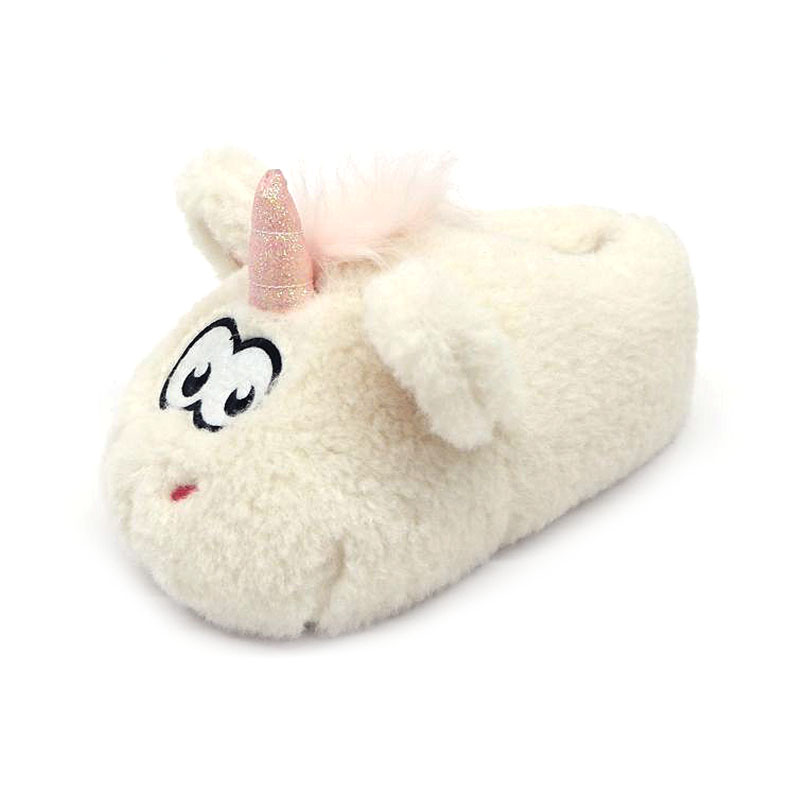
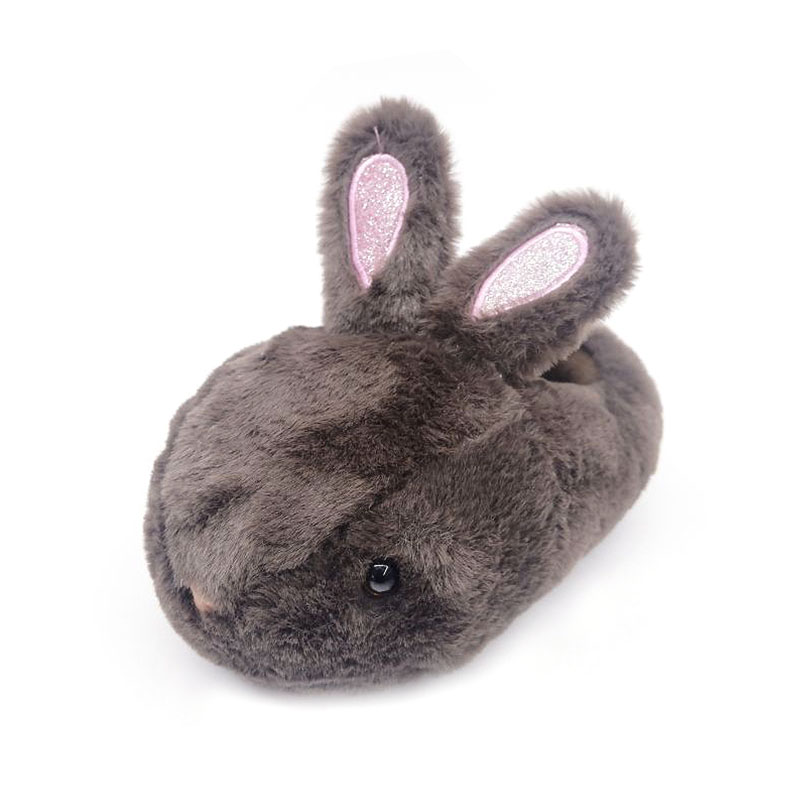 Customizable Indoor Slippers for Home Wear SupplyExplore customizable indoor slippers in rabbit, unicorn and dinosaur claw designs, with comfort materials, anti-slip soles and factory supply for home-wear buyers.View Product →
Factory capacity matters once the design is settled. Our own plant in Cixi, Ningbo, has been running since 2001, with more than 200 staff, six production lines, roughly four million pairs a year, and a technical team of over twenty people working on patterns and sole development. BSCI certification and testable materials matter to buyers shipping into the EU and North America, and the proximity to Ningbo port shortens the gap between a confirmed order and a booked vessel.
OEM and ODM both work here, but they need different inputs. OEM needs your drawing, grading and face artwork. ODM needs a reference, a target price and a launch window — the rest comes back as a proposal with two or three face options.
A short supplier checklist
- Ask for a physical pair in EU 44, not just a size 38 photo sample.
- Test traction on wet tile and on lacquered wood, in the same session.
- Wash one pair at 30°C and one at 40°C, then compare sole edges and appliqué.
- Measure eye spacing and ear height on ten pairs from the same lot.
- Confirm whether the quoted price covers the mesh wash bag and the care card.
- Check the grading table, not only the sample, before approving the order.
A programme that passes all six points usually reorders. One that skips point two or three usually comes back as a credit note.
The short version
Adult cat slippers are a plush product sitting on a footwear platform, and the platform decides whether the cuteness survives a winter. Get the sole compound and thickness right, grade the last for adult feet instead of scaling a children's pattern, fix face tolerances in the tech pack, and test washing before the care label is printed. Do those four things and the design has room to be as playful as the range needs.
If you are weighing up a cat design against the animals already in production, the sensible next step is a sample in your largest size and your own flooring, not another render.